Hot Sleeper vs Cold Sleeper - The Best Bedding for Your Sleep Style
Sleep is supposed to be the most blissful time, when our bodies recharge and our minds reset. That's easiest when your bedding works with your natural temperature. If it doesn't, it might be working against you. Not everyone sleeps the same way: some people run hot, others run cold, and finding the right balance can feel like an uphill battle.
But not anymore! Understanding your sleep style is the first step to choosing the right bedding. In this blog we explain what it means to be a hot sleeper or a cold sleeper, and which bedding suits each. With the right choices, you can enjoy the restful nights you deserve.
Understanding Sleep Style and Bedding
Ever find yourself tossing and turning because you’re too hot, or shivering under the covers? Your sleep comfort has a lot to do with how your body regulates temperature, so choosing the right bedding can make all the difference.
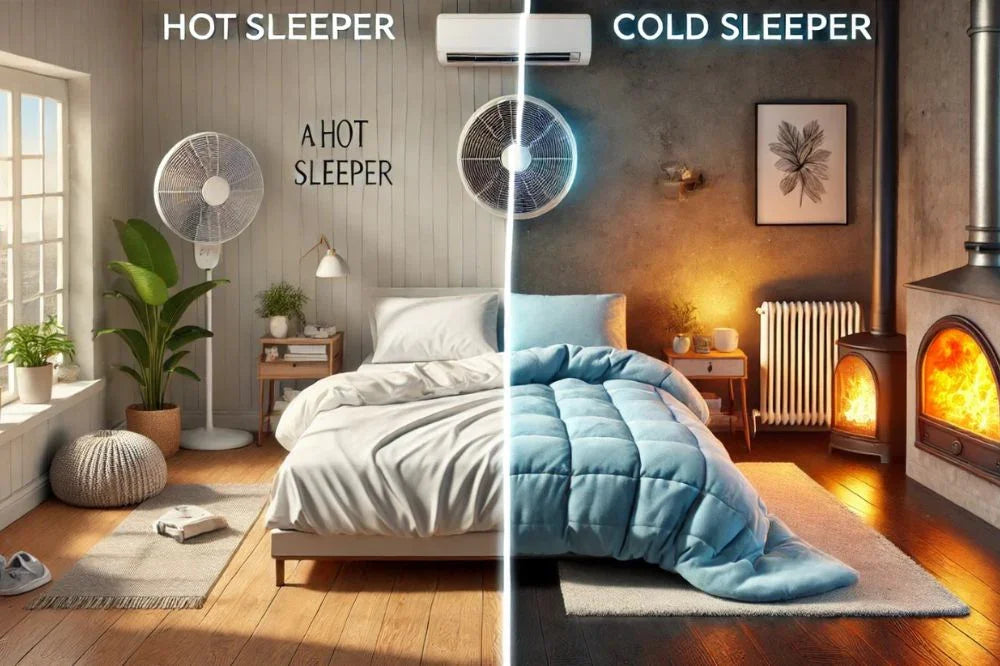
If you tend to overheat at night, it's harder to reach the cool, restful state needed for quality sleep. For hot sleepers, breathable fabrics like cotton percale, linen and mulberry silk help regulate temperature.
On the flip side, if you’re always chilly at night, you need bedding that helps trap heat. The key is understanding your body’s needs. Try experimenting with different fabrics, layers and room temperatures until you find the balance that works for you.
Also read: Bedsheet Sizes Guide
Best Bedding for Hot Sleepers
For hot sleepers, heat is the ultimate sleep disruptor. Here is how to choose bedding that keeps you cool.
Sheets
Sheets are your first line of defence when it comes to cooling. Linen is the best choice: it's lightweight, very breathable and handles moisture well.
Next comes cotton percale. Its plain weave feels crisp and cool, and it's the fabric used on hotel beds.
Quilts and Blankets
Opt for lightweight layers that won’t smother you. Linen summer quilts are thin yet cosy, and work well in air-conditioned rooms.
Pillowcases
Ever flipped your pillow a hundred times trying to find the cool side? That’s a sign you need a cooler pillowcase. Silk or linen pillowcases are breathable and cool to the touch, and silk is gentle on your skin and hair too.
Also read: Cosy Bedroom Ideas
Best Bedding for Cold Sleepers
If you're someone who piles on layers before sleep, you know the struggle. The right bedding can help you make a warm, inviting bed that keeps you snug all night long.
Sheets
When you’re a cold sleeper, your sheets should feel like a soft, toasty hug, offering warmth without making you overheat. Bedlam’s cotton sateen sheets are smooth and silky, with a denser weave that feels warmer than percale.
Quilts and Blankets
Cold sleepers need layers that trap warmth. Look for duvets and comforters with a medium to heavy-weight fill, and add a pashmina throw for extra warmth on winter nights.
Pillowcases
Your pillowcase plays a surprisingly big role in how warm you feel. If you prefer something smooth and cosy, go for cotton sateen pillowcases or mulberry silk pillowcases, which feel warm in winter and cool in summer.
Also read: Benefits of Silk Pillowcases
Factors to Consider in Bedding Choices
Choosing the best bedding for hot or cold sleepers means matching your sleep environment to your body’s needs. Keep these key factors in mind.
Allergies
Do you ever wake up with a stuffy nose or itchy eyes? Your bedding might be the culprit. Natural fabrics like cotton, linen and silk are gentle on sensitive skin, and washing your pillowcases and duvet covers regularly helps keep allergens at bay.
Climate
For warmer climates, or if you run hot, choose lightweight, breathable materials like linen or cotton percale. For cold sleepers, heavier duvets and warm layers work best. As a pro tip, an all-season duvet lets you adjust your bedding through the year.
Quality
Investing in high-quality bedding isn’t just about luxury. It's about sleeping better. Besides thread count, look at the weave and the fabric itself. Natural fabrics like long-staple cotton, linen and silk last longer and feel better than polyester blends.
Conclusion
There's no one-size-fits-all answer to the right bedding. It’s about understanding your sleep style and personal preferences. From cooling sheets to thoughtfully chosen pillowcases and duvet covers, you have many options, and the right choices will set you up for deeper, more restful sleep. Whether you run hot or cold, we can help you pick the right bedding.
FAQs on Hot and Cold Sleepers
1. What is the difference between a hot sleeper and a cold sleeper?
A hot sleeper tends to feel hot, and sometimes sweaty, at night. A cold sleeper needs extra layers to stay warm while they sleep.
2. What kind of mattress is best for hot sleepers?
Hot sleepers do best on mattresses made from breathable materials that don't trap heat.
3. What is the best temperature to sleep in?
Many people sleep best in a room that's slightly cool, around 18–20°C, though the most comfortable temperature varies from person to person.
4. Why is a cooler room better for sleep?
Your body temperature naturally drops as you fall asleep, and a slightly cool room helps that happen, which can make it easier to fall and stay asleep.